
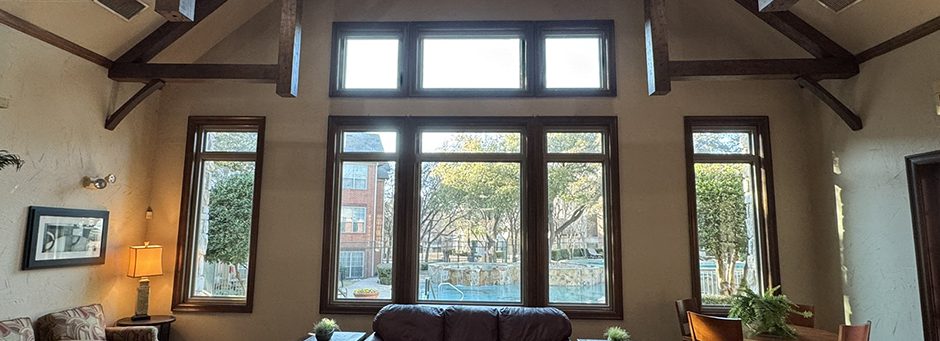
ASTM Glass Standards for Replacement Windows
Homeowners sometimes notice a small scratch, speck, bubble, seed, chip, or coating variation after new replacement windows are installed. The natural question is simple: is this a defect, or is it within the accepted glass standard?
The answer usually depends on how the glass is inspected. Industry standards do not judge window glass by pressing your nose against the pane with a flashlight at sunset. Glass is generally evaluated from a normal viewing distance, at a normal viewing angle, under normal daylight conditions. In other words, glass is manufactured to be looked through, not examined like a diamond under a jeweler's loupe.
Plain-English summary: If a visible condition cannot be seen with the naked eye from the required inspection distance, at approximately 90 degrees to the glass, in daylight but not direct sunlight, it will often be considered acceptable under industry inspection guidelines.
What ASTM standard applies to flat window glass?
ASTM C1036, Standard Specification for Flat Glass, is commonly referenced for flat architectural glass used in products such as coated glass, insulating glass units, laminated glass, mirrors, spandrel glass, and similar glazing products. ASTM standards are revised over time, so manufacturers, contractors, and homeowners should confirm the current version and the applicable warranty language before making a final decision on a claim.
The 10-foot glass inspection rule
A common field guideline is to inspect the glass from about 10 feet away, facing the glass at roughly 90 degrees, in daylight without direct sunlight. For some inspections, the central area and the border area of the glass may be judged differently. Larger panes may also allow more visible blemishes than smaller panes.
This is one reason a small mark may be frustrating to a homeowner but still fall within the accepted glass standard. The standard is not based on whether an imperfection can be found. It is based on whether the condition is visible under the required inspection method and whether it exceeds the allowable size, number, or location.
Common glass conditions homeowners ask about
- Scratches: Fine scratches may be allowable depending on length, visibility, pane size, and location.
- Debris, dirt, or spots: Small visible particles or spots may be acceptable if they fall within size and quantity limits.
- Seeds, bubbles, knots, or stones: Minor inclusions can occur in flat glass manufacturing and are judged by visibility and size.
- Shells or chips: Edge conditions are usually evaluated differently than central glass conditions.
- Low-E coating issues: Coatings should appear uniform when viewed using the proper inspection method.
Central glass area vs. border area
Most inspection standards distinguish between the central viewing area and the border area near the edge of the lite. The central area is normally judged more strictly because it is the main viewing area. The border area is closer to the frame, spacer, glazing bead, or sash and may have different limits.
| Glass size | Typical inspection concern | General homeowner takeaway |
|---|---|---|
| Up to 6 sq. ft. | Very limited visible imperfections may be allowed. | Small panes are usually judged more tightly. |
| 6 to 35 sq. ft. | More than one small visible condition may be allowable if separated and within limits. | Medium panes may allow slightly more tolerance. |
| Over 35 sq. ft. | Larger panes may allow additional small visible conditions. | Large picture windows are not expected to be microscope-perfect. |
How long should the glass be inspected?
Glass inspection is normally a timed visual inspection, not an unlimited search. In practical terms, this means the observer should view the glass under the proper conditions for a short, reasonable period based on the size of the lite. If someone studies the pane for several minutes from inches away, almost any glass can be made to look imperfect.
What if I can clearly see a scratch or defect?
If a scratch, chip, coating problem, debris, bubble, or other condition is clearly visible from the proper inspection distance and viewing angle, it may justify a closer review. The next step is to document the concern in normal daylight, identify the approximate size and location, and compare it with the manufacturer's warranty and the applicable glass standard.
Our practical advice for Dallas homeowners
Before assuming the glass must be replaced, evaluate it the way the standard expects it to be evaluated. Stand back, view the glass straight on, use normal daylight without direct sun glare, and focus on the main viewing area. If the condition is still obvious, take photos, note the window location, and contact your window contractor.
The Window Connection can help Dallas-area homeowners understand whether a concern appears to be normal glass tolerance, a warranty issue, installation-related damage, or something that should be reviewed by the manufacturer.
Important note: This article is a homeowner-friendly summary, not a substitute for the full ASTM standard, manufacturer specifications, or written warranty terms. For formal disputes, always rely on the current published standard and the product manufacturer's warranty documentation.